Why Two People in the Same Class Can Lose Completely Different Amounts of Fluid
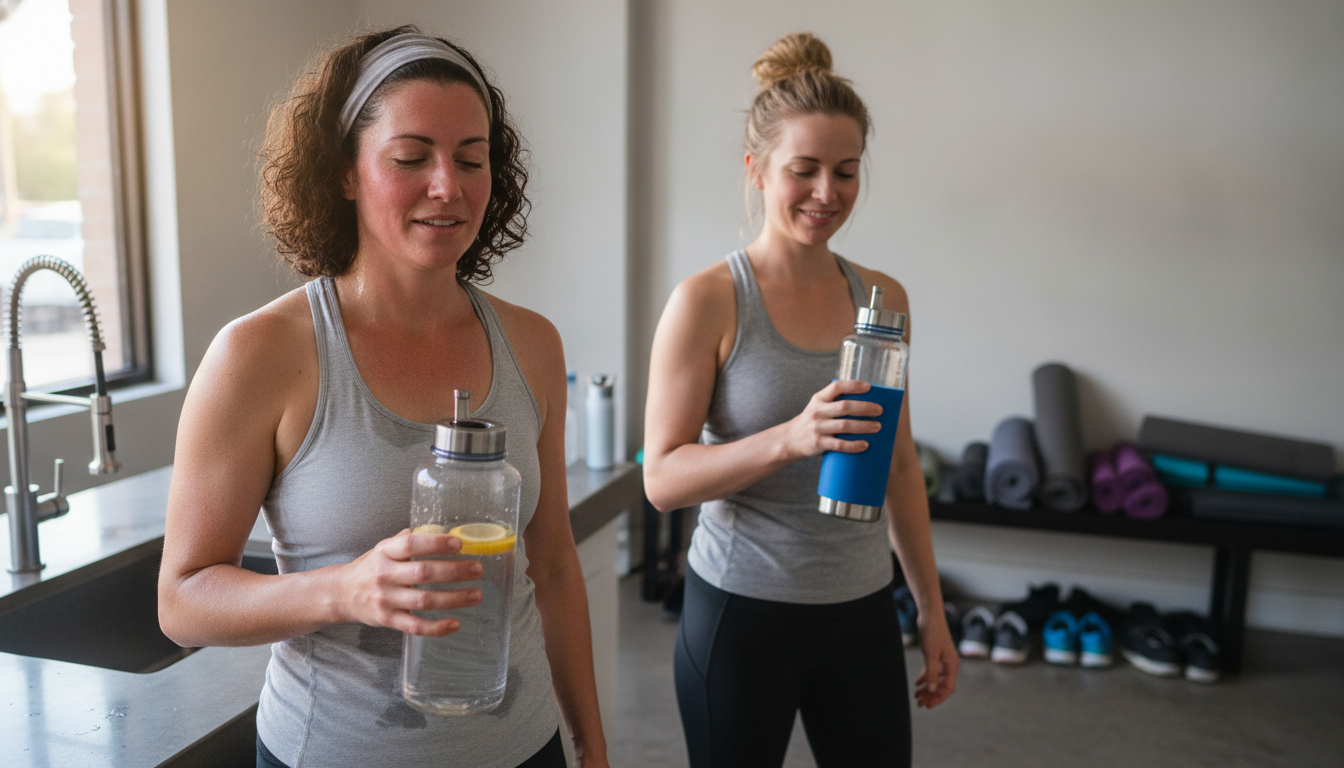
You finish a 60-minute heated class and feel absolutely wrung out. Your mat neighbor looks like she barely broke a sweat. Same room, same teacher, same sequence. What is going on?
Sweat rate is one of the most individual variables in exercise physiology. It is shaped by genetics, fitness level, heat acclimatization, body size, hormonal fluctuations, and even what you ate that morning. Research published in sports medicine journals has found that sweat rates during moderate exercise can range from roughly 0.5 liters per hour on the low end to well over 2 liters per hour for heavy sweaters in hot conditions. That is a four-fold difference between two people doing the exact same thing.
The practical consequence: a flat hydration rule like "drink eight ounces every 20 minutes" is almost meaningless without knowing where you fall on that spectrum. Drinking too little leaves you dehydrated and foggy. Drinking too much plain water without replacing sodium can actually make you feel worse, a condition sometimes called exercise-associated hyponatremia. The fix is not drinking more or less in the abstract. It is drinking to match your personal output, and replacing the minerals that leave with your sweat.
The Simple Field Test You Can Do at Home
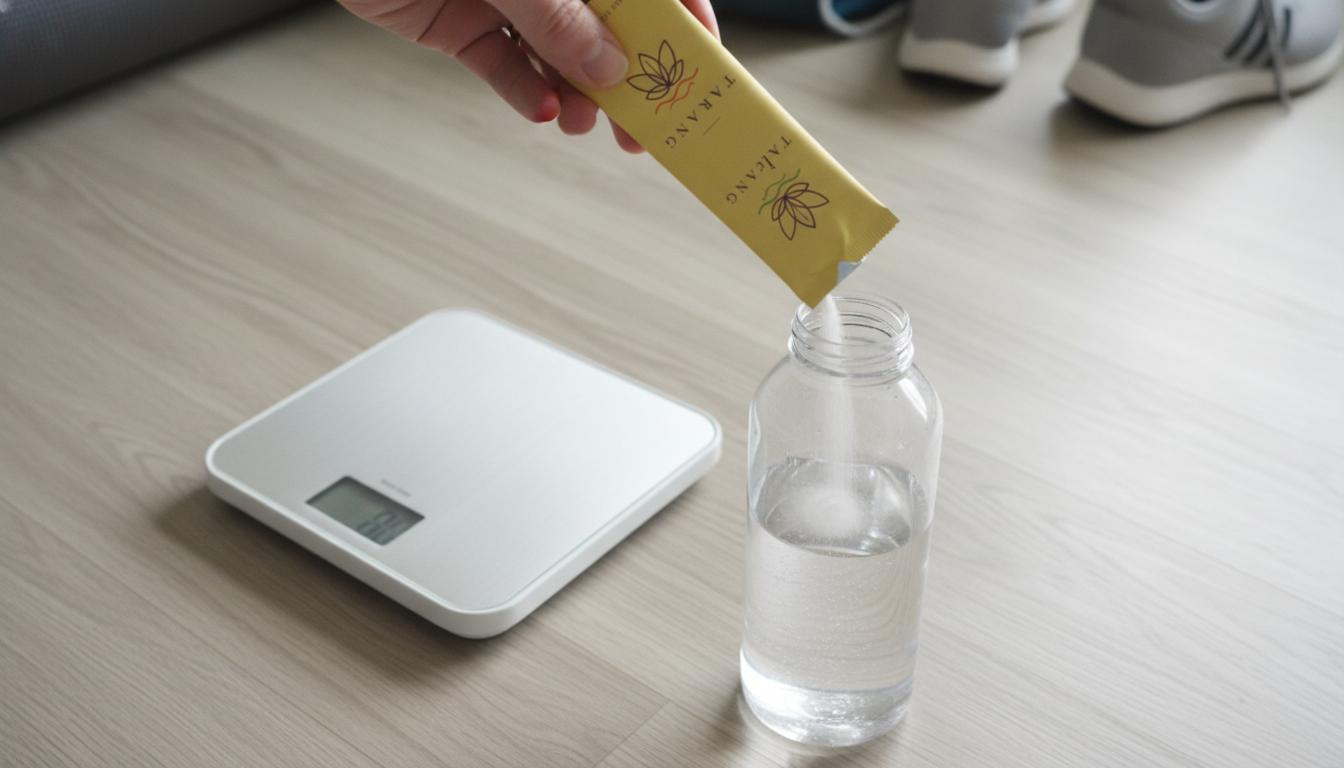
You do not need a lab to get a useful estimate of your sweat rate. Athletes and coaches have used a basic weigh-in method for decades, and it takes about two minutes of prep.
- Weigh yourself in minimal, dry clothing immediately before your session. Note the number.
- Practice as normal for one hour. If you drink during the session, note roughly how much (in ounces).
- Weigh yourself again in the same dry clothes immediately after. Do not eat or use the bathroom first.
- Do the math: Each pound of body weight lost equals roughly 16 oz (about 480 ml) of fluid lost. Add back any fluid you drank during the hour. That total is your approximate sweat loss for that session.
Run this test a few times across different conditions, a cool studio day, a hot room day, a longer run, and you will start to see a personal pattern. Heavy sweaters (those losing more than 1 to 1.5 lbs per hour) often need to be more deliberate about sodium replacement, not just volume.
One more easy signal: look at your skin after class. A white or gritty residue on your temples, hairline, or forearms is crystallized sodium. High-salt sweaters often see this. It is useful information about how much sodium you are actually losing per session.
How to Build Your Drink Plan Around What Your Body Actually Loses
Once you have a rough sense of your sweat rate and salt concentration, you can build a simple, repeatable plan. Here is a framework that works for heated yoga, pilates, strength sessions, and longer runs.
Before Practice
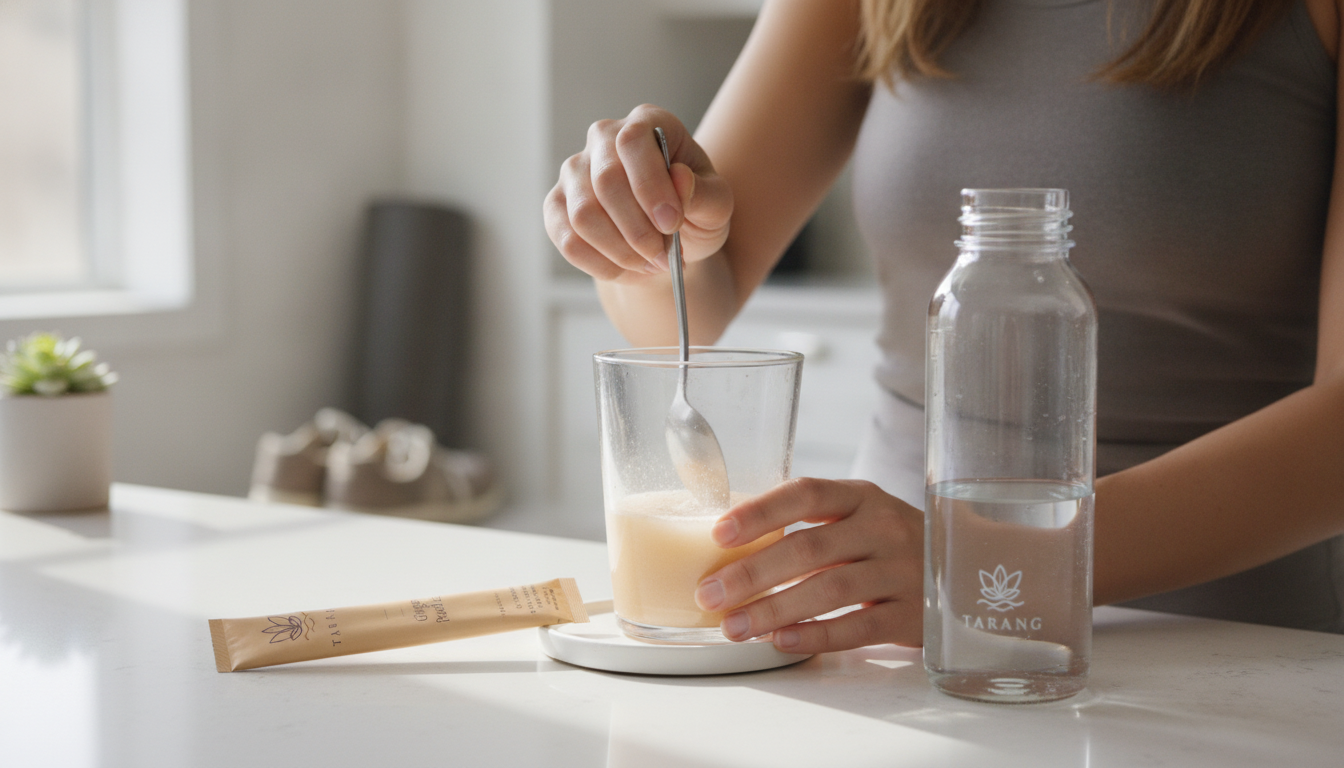
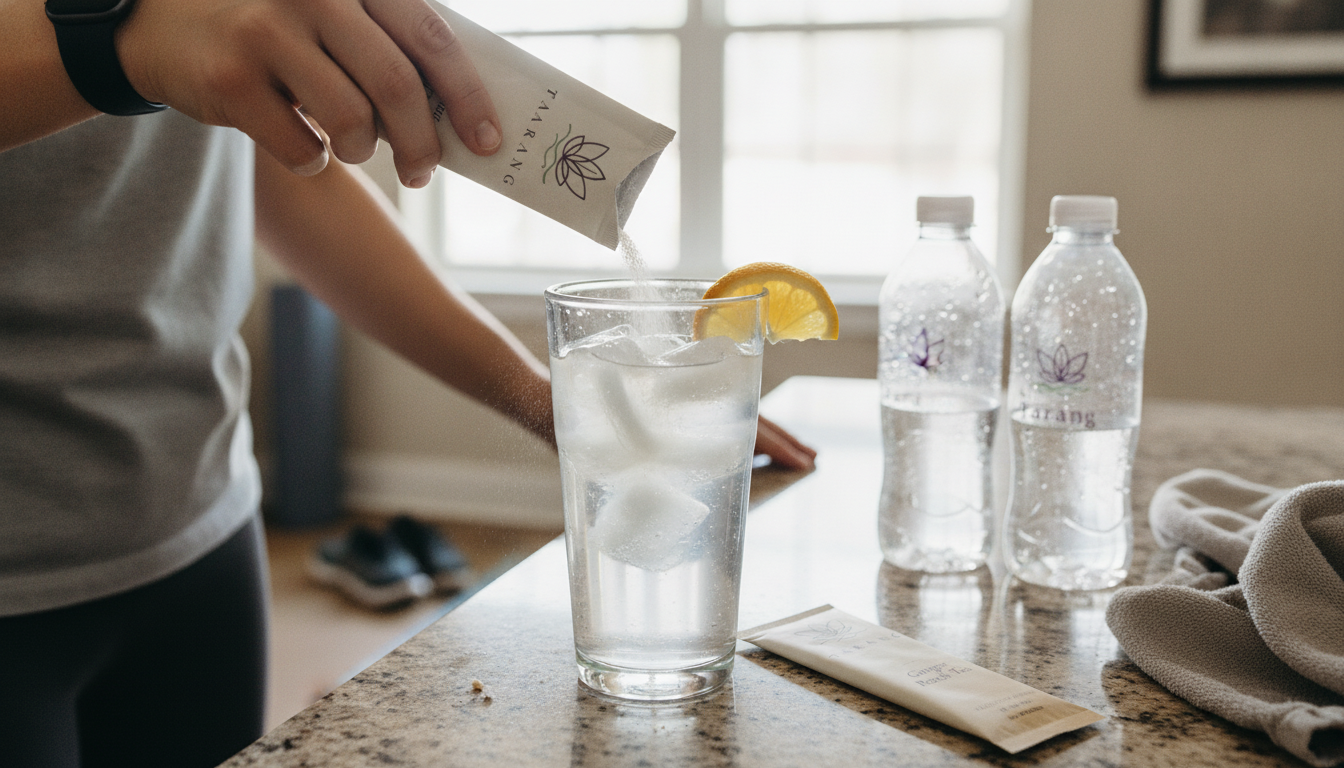
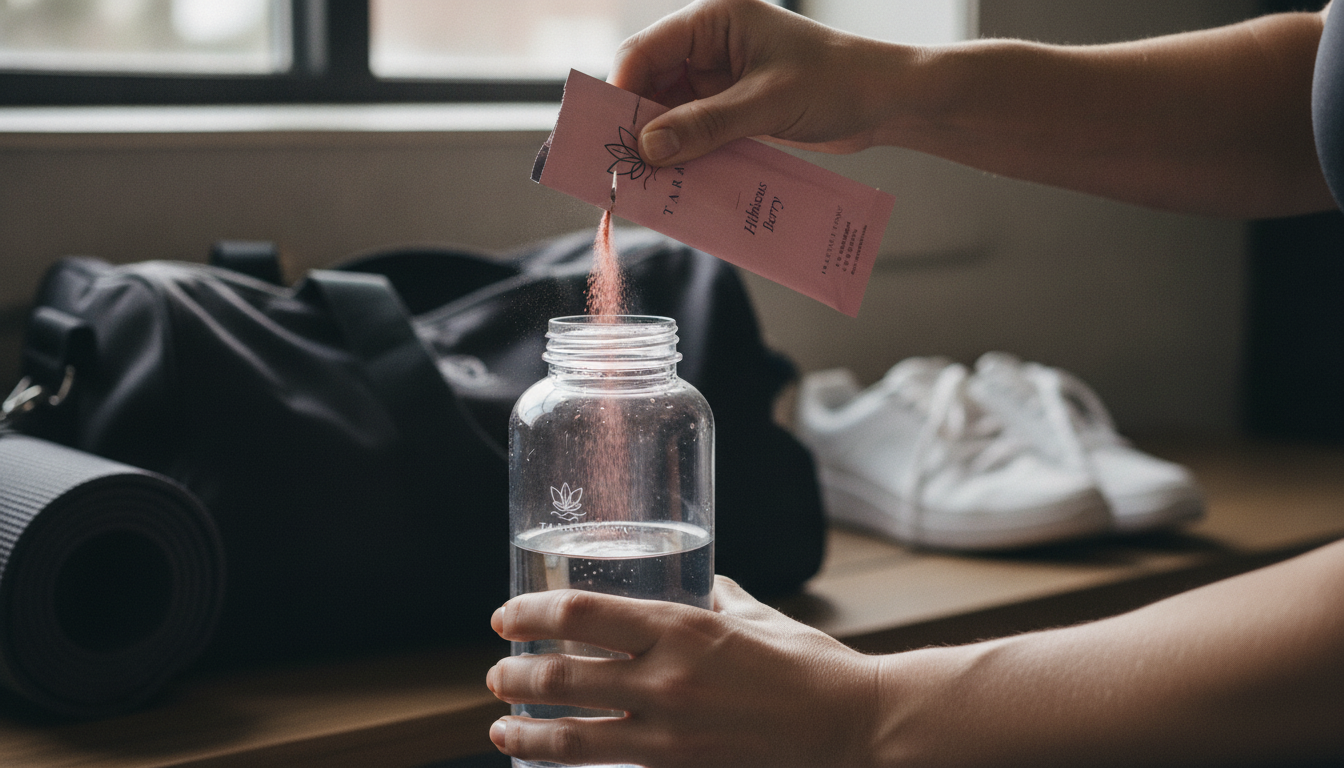
Arrive already hydrated. That means consistent fluid intake throughout the day, not a frantic 20-ounce chug right before class. Mix one stick of Tarang into 16 to 20 oz of water in the 30 to 60 minutes before you start. The 400 mg of sodium, paired with potassium, magnesium, calcium, and coconut water powder, gives your body something to hold onto when the sweat starts. The 5 g of micronized creatine monohydrate begins stacking its daily dose at the same time.
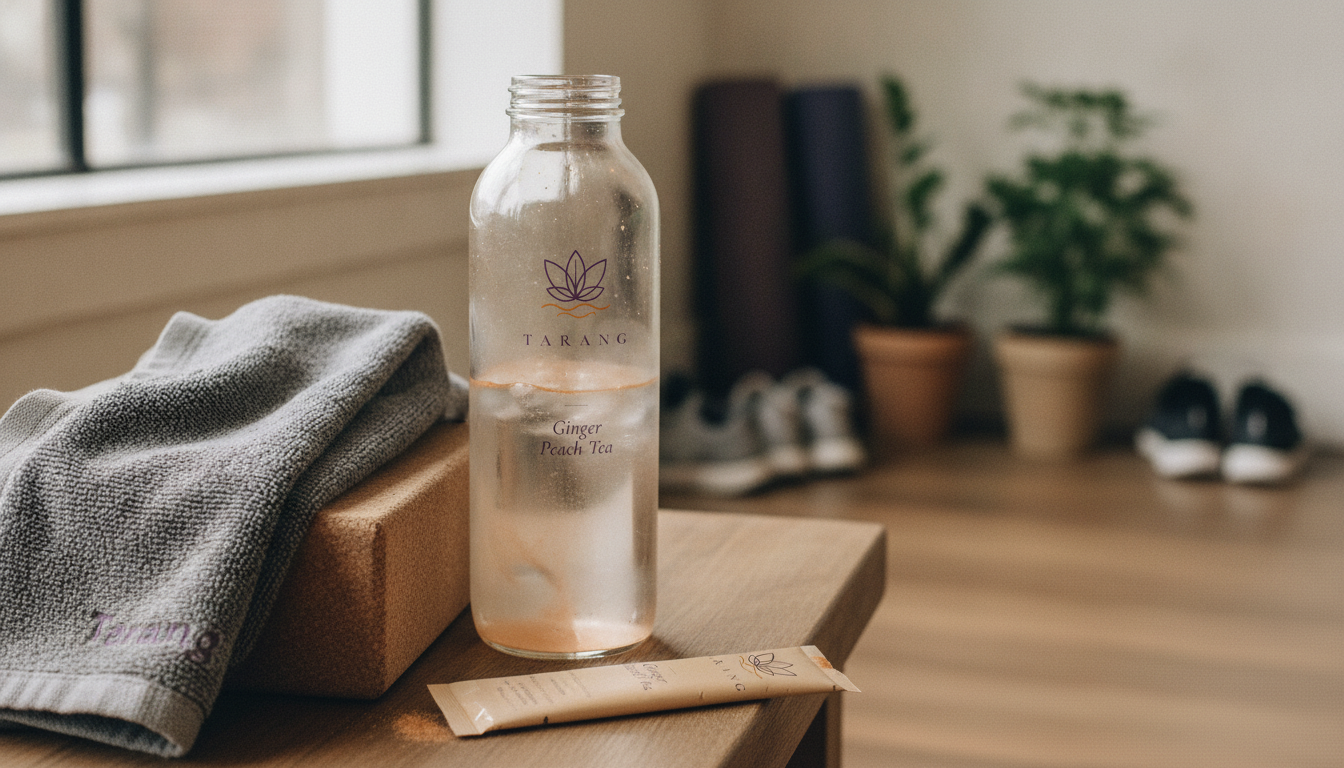
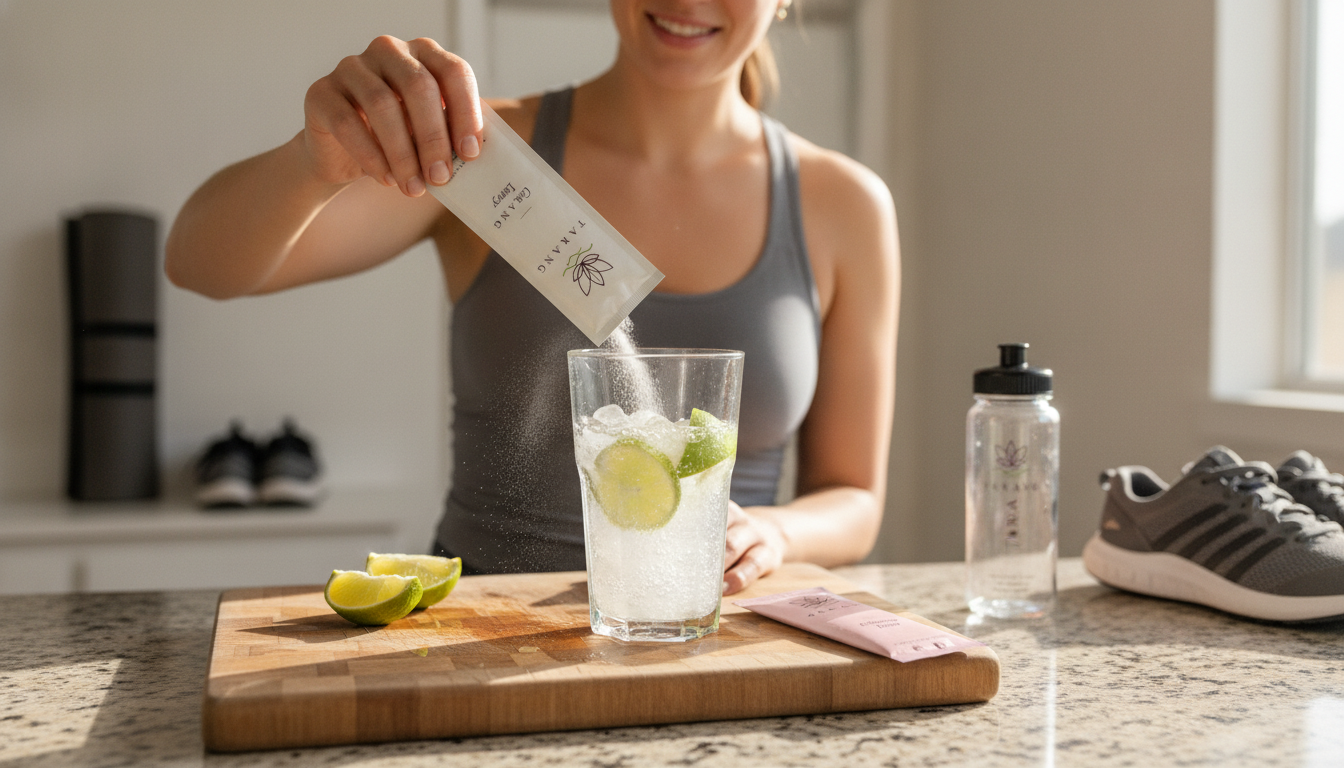
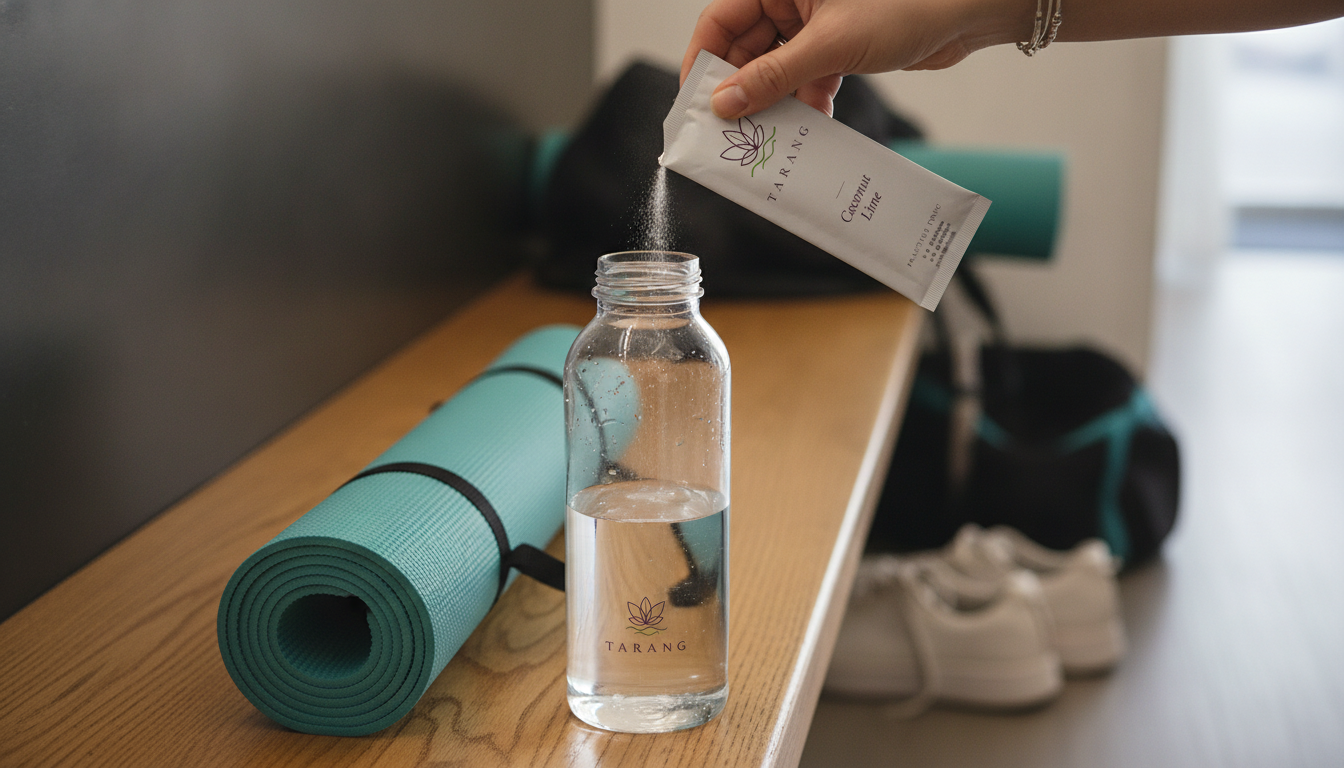
Tarang comes in three flavors right now. Yuzu Lemon is bright and citrusy, easy to finish quickly. Hibiscus Berry is a little more floral and works well over ice. Coconut Lime leans tropical. Pick the one you actually want to drink so you finish the glass.
During Practice
For a 60-minute heated class, small sips every 15 to 20 minutes is usually enough if you arrived well-hydrated. For sessions longer than 75 minutes or runs over an hour, consider a second stick dissolved into your mid-session water, especially if you are a heavier sweater. There is no rule against two sticks in a long day; just pay attention to total sodium across all sources.
After Practice
Rehydration after class does not need to be dramatic. Drink roughly 16 to 24 oz of water for every pound you estimate you lost. Plain water works here because you have already replaced your minerals pre-session and during. A small snack with natural sodium, think whole foods rather than processed ones, helps retain what you drink.
Where Creatine Fits Into a Sweat-Aware Routine
One question that comes up a lot: does creatine affect how you sweat or how much fluid you need? The short answer is no, creatine does not increase sweat rate. Some research suggests creatine may support intracellular water retention, meaning it helps muscle cells hold water at the cellular level, which is a different mechanism from surface sweating entirely. This is not a medical claim, and if you have specific health questions you should talk to your provider.
What does matter for a sweat-aware routine is consistency. Creatine works through daily accumulation in muscle tissue, not from a single large dose. That means taking your stick on rest days matters as much as taking it on practice days. The electrolyte load in a Tarang stick on a rest day is appropriate for regular daily use in healthy adults, and the creatine keeps building.
If you are in a particularly heavy sweat period, like a summer training block or back-to-back heated classes, do not abandon the creatine. Just keep the pre-session electrolyte routine tight and trust that the daily habit is doing its job.
The Bottom Line on Reading Your Sweat
Hydration is not one-size-fits-all, and the people who feel best in heated rooms and long training blocks are usually the ones who have taken a little time to understand their own output. The field test takes 10 minutes to set up. The residue on your skin tells you something real. And a consistent daily stick habit, tuned to your sweat signals, gives you a reliable foundation to train from.
Start with the Discovery Box if you want to find your flavor before committing to a monthly cadence. Thirty sticks, three flavors, one straightforward routine. Your sweat is giving you data. Might as well use it.
Questions
- How do I know if I am a heavy sweater?
- A rough field test: weigh yourself in workout clothes before and after a one-hour session without drinking. Each pound lost is roughly 16 oz of fluid. If you consistently lose more than 1.5 lbs per hour, you are on the heavier end of the sweat spectrum and likely need more sodium, not just more water.
- Does creatine make you sweat more?
- Creatine does not increase sweat rate. Research suggests it may support intracellular hydration, which is a separate mechanism from surface sweat. Taking creatine daily alongside electrolytes is generally considered safe for healthy adults. This is not medical advice; talk to your provider with specific concerns.
- Why does drinking more water sometimes make me feel worse during class?
- Over-drinking plain water without replacing lost sodium can dilute blood sodium levels, leading to a heavy, bloated, or foggy feeling. Electrolytes, especially sodium, help your body actually use the fluid you take in.
- How much sodium do I need per hour in a heated class?
- General sports science estimates range from 300 to 1000 mg of sodium per hour depending on sweat rate and conditions. Tarang delivers 400 mg sodium per stick along with potassium, magnesium, calcium, and coconut water powder, which covers a solid baseline for most practitioners in a heated room.
- Should I take Tarang on rest days if I am not sweating much?
- Yes. The creatine in Tarang works best when taken consistently every day, including rest days. The electrolyte load on a rest day is mild and appropriate for regular daily use in healthy adults.
This guide is general information, not medical advice. If you are pregnant, nursing, taking medication or managing a condition, talk to a healthcare professional before changing how you hydrate or supplement.