Walk into a hot room and your body starts making decisions you never consciously approved. Heart rate nudges up. Sweat glands open. Blood reroutes to your skin. All of that happens before the instructor says a single word. Understanding the six phases your body moves through in a heated class gives you a clearer picture of when to drink, what to drink, and why plain water alone often falls short.
This is not a scare piece. Most healthy adults handle heated classes well. It is just useful to know what your body is actually doing so you can support it with something smarter than guesswork.
Phase 1: Before You Even Walk In - The Pre-Load Window

Your sodium and fluid status at the start of class shapes everything that follows. If you arrive already mildly dehydrated from a night of sleep or a busy morning with too much coffee and not enough water, your body enters the hot room at a disadvantage. This pre-class window, roughly 20 to 40 minutes before you step on the mat, is the easiest place to set yourself up well.
A stick of Tarang Hibiscus Berry or Tarang Yuzu Lemon mixed into 12 to 16 oz of water gives you 400 mg of sodium plus potassium, magnesium, and calcium before your first sun salutation. The 5 g of creatine in the same stick also starts its daily work, and creatine timing is flexible enough that pre-class is as good a moment as any.
Phase 2: The First 15 Minutes - Core Temperature Climbs

The room is 95 to 105 degrees Fahrenheit, depending on your studio. In the first quarter of class, your core temperature begins rising. Your cardiovascular system responds by increasing heart rate and directing more blood toward the skin to facilitate heat dissipation. This is completely normal. Your body is doing exactly what it is designed to do.
What catches some people off guard is how quickly they begin to sweat and how early the sodium loss starts. Sweat is not just water. It carries sodium, chloride, potassium, and trace magnesium with every drop. Beginning the class with some sodium already on board means your body has a buffer.
Phase 3: Finding Your Working Pace
By the time you hit the midpoint of a flow or the working sets of a heated pilates circuit, your body has found its rhythm. Sweat rate has stabilized into something predictable for your size, fitness level, and the room temperature. Sipping 4 to 6 oz of electrolyte water every 10 to 15 minutes during this phase is a reasonable target for most people, though individual needs vary. You are not trying to flood your system; you are trying to keep pace with what you are losing.
The L-theanine in Tarang (200 mg per stick) is worth mentioning here. L-theanine is associated with calm focus without the jitteriness of caffeine. For a heated class where staying steady and controlled matters as much as working hard, that is a quality worth having in your bottle. This is general information, not medical advice.
Phase 4: The Sweat Peak - Where Most People Under-Drink
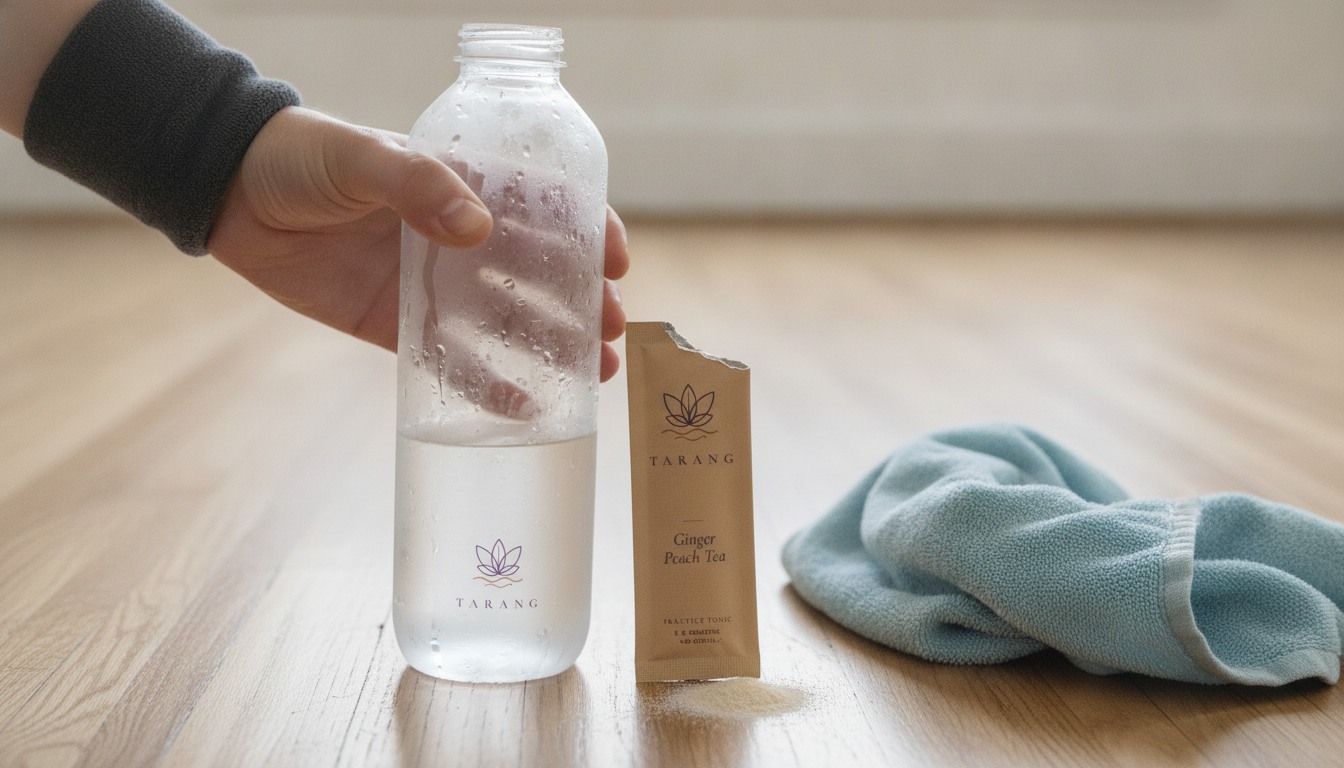
Somewhere in the second half of a 60 to 90 minute heated class, sweat loss often peaks. This is also, ironically, the moment when many people drink the least. They are focused on the sequence, managing fatigue, or simply do not feel thirsty the way they expect to.
Thirst is a lagging signal. By the time you feel strongly thirsty in a hot room, you may already be meaningfully behind on fluids. A practical fix is to build a sipping habit tied to natural class transitions, between standing and floor series, between circuits, or at any pause - rather than waiting for thirst to prompt you.
Plain water during this phase replenishes volume but not minerals. If you have been sweating for 45 minutes and you switch to plain water only, you are diluting an already lower-than-optimal sodium concentration. An electrolyte drink with real sodium content helps you absorb and retain the fluid you are drinking, not just pass it through.
Phase 5: The Cool-Down - Circulation Shifts Again
Savasana is not just a reward. It is a physiological transition. As intensity drops, blood redistributes, heart rate falls, and your body begins pulling back the resources it had mobilized for thermoregulation. Some people feel lightheaded or shaky during cool-down, which is often a sign of a hydration or sodium gap catching up with them.
Sipping a little water during the final stretches rather than gulping it all at once is easier on your system. If you saved some of your electrolyte water for this moment, even better.
Phase 6: The Recovery Window - Mineral Debt and What to Do About It

Post-class is when the cumulative effects of sweating become most visible. You feel the effort. Your muscles are warm and worked. Your mineral stores have been drawn down. This recovery window, the 30 to 60 minutes after class, is a good time to prioritize real food with sodium and potassium, alongside continued hydration.
If you did not manage to take a Tarang stick before class and you want to keep your daily creatine habit consistent, taking one after class works just as well. The creatine accumulates in muscle tissue over weeks of daily use, so hitting your 5 g on any given day, whether before, during, or after practice, keeps the streak intact. Consistency across days matters more than perfect timing within a single session. This is general information; please consult your healthcare provider for personalized supplement guidance.
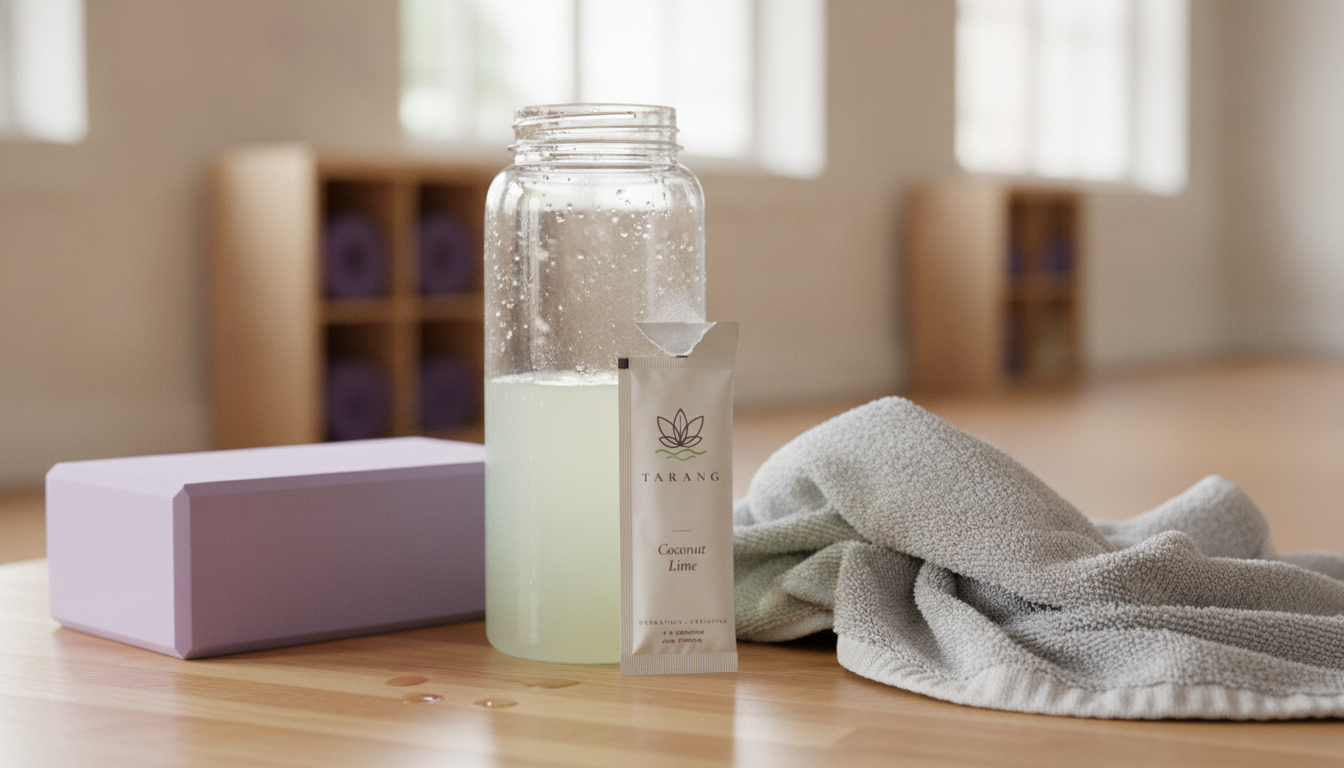
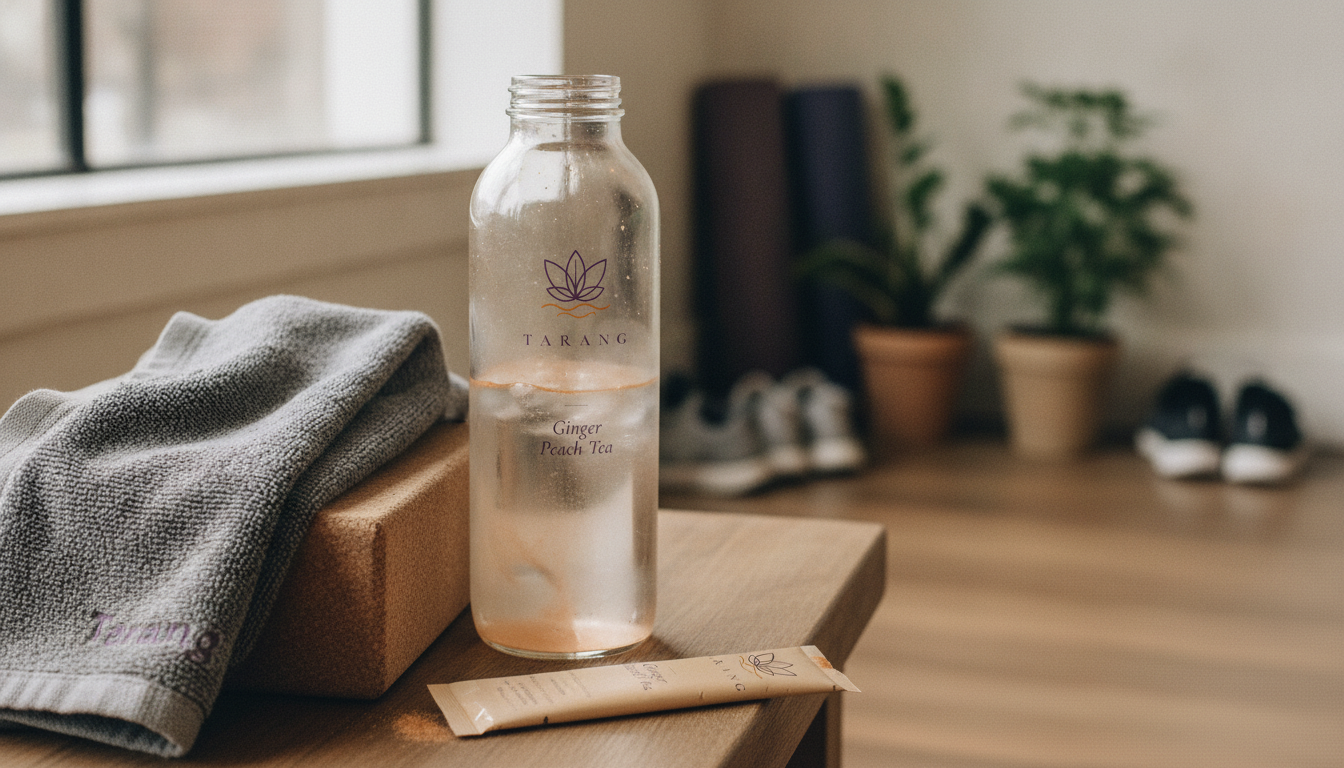
Tarang Coconut Lime is a particularly easy post-class choice. The coconut water powder base pairs naturally with the cool-down moment, and the lightly sweet flavor is easy on a tired palate. Ginger Peach Tea (coming soon) will bring a warming botanical note that could suit cooler-season recovery especially well.
Putting It Together
You do not need to overthink this. One stick before class, sips of plain water during, and a good meal after covers most of what a heated class demands. What the six-phase breakdown gives you is a reason to take the pre-class stick seriously rather than skipping it because you are running late, and a reason to keep sipping even when you do not feel urgently thirsty.
Hot rooms are demanding in a specific way. They ask your cardiovascular system, your sweat glands, and your mineral stores to work harder and faster than a temperate workout does. Giving your body a head start with sodium, creatine, and the supporting minerals before you step through that door is one of the simpler upgrades you can make to your practice routine.
These statements are for general informational purposes and are not intended as medical advice. If you have a medical condition or questions about supplementation, consult your healthcare provider. Tarang is a dietary supplement for adults 18 and older. Do not use if pregnant or nursing.
Questions
- How much sodium do I actually lose in a single heated class?
- Sweat sodium concentration varies, but research suggests a range of roughly 400-900 mg per liter of sweat. A 60-minute heated class can push 0.5 to 1.5 liters of sweat for many people, meaning you may lose 200-1,000 mg of sodium in one session. Starting with adequate sodium before class helps buffer that loss.
- Should I take creatine before or after a heated class?
- Creatine timing matters less than daily consistency. Most people find it easiest to mix one stick 20-30 minutes before class, which also delivers pre-class electrolytes. On rest days, take it at any consistent time. This statement is for general information; it is not medical advice. Consult your healthcare provider if you have questions about supplementation.
- Is it safe to take electrolytes in a heated room?
- Electrolyte drinks are designed to support fluid balance during activity. For most healthy adults, sipping an electrolyte drink during a heated class is a sensible practice. If you have a kidney condition, heart condition, or other medical concern, speak with your provider first. This is not medical advice.
- Why do I feel lightheaded even when I drink a lot of plain water before class?
- Plain water can dilute blood sodium if you drink a large volume without replacing the electrolytes you lose. This is sometimes called exercise-associated hyponatremia. Including sodium and other minerals in your hydration routine helps your body hold and use the water you drink more effectively.
- What makes Tarang different from plain electrolyte tabs or sports drinks?
- Tarang combines 400 mg sodium with potassium, magnesium, calcium, and coconut water powder, plus 5 g micronized creatine monohydrate per stick. It also includes six botanicals, L-theanine, and vitamins C, D3, and B12, all sweetened with allulose and monk fruit and no stevia or artificial sweeteners. Most plain electrolyte tabs skip creatine entirely, and most creatine powders skip electrolytes.
This guide is general information, not medical advice. If you are pregnant, nursing, taking medication or managing a condition, talk to a healthcare professional before changing how you hydrate or supplement.