The Heat Problem Most Class-Goers Miss

Walk into a heated yoga or pilates studio and you already know what is coming. The room is 95-105 degrees Fahrenheit, the humidity is high, and you will be sweating before the first sun salutation is finished. Most people remember to bring water. Fewer think carefully about what should actually be in that water.
Here is the part that gets overlooked: heat training creates two separate demands on your body at the same time. First, your sweat rate climbs, pulling sodium, potassium, magnesium, and calcium out of your system faster than a room-temperature workout ever would. Second, if creatine is part of your practice routine, the cellular environment that creatine needs to do its job depends partly on how hydrated and electrolyte-balanced your muscles are going into the session.
These two demands are related. Getting one right while ignoring the other leaves a real gap in your pre-class prep.
What the Numbers in a Stick Actually Mean
A lot of electrolyte products on the market are built around a single number, usually sodium, and leave everything else vague. When you are training in a heated room, the full electrolyte picture matters more.
Each Tarang Yuzu Lemon stick, or any Tarang flavor, delivers 400 mg of sodium alongside potassium, magnesium, calcium, and coconut water powder. That sodium number is meaningful. Sports nutrition researchers consistently observe that heated exercise can drive sweat sodium losses of 500-1000 mg or more per hour depending on sweat rate and individual chemistry. Starting a class with electrolytes already in your system gives your body something to work with before the deficit grows.
The creatine number matters just as much. Each stick contains 5 g of micronized creatine monohydrate, which is the daily maintenance dose most research points to for sustained muscle creatine stores. Micronized means the particles are smaller and dissolve cleanly in water rather than settling at the bottom of your bottle.
Putting both in one stick is not just a convenience play. Creatine is stored in muscle cells alongside water, and its uptake is supported by an environment where your cells are properly hydrated. Showing up to a heated class already running low on electrolytes is not the setup you want if you are trying to get consistent value from a daily creatine habit.
Note: Tarang is a dietary supplement, not a medical treatment. These statements have not been evaluated by the FDA. Consult a qualified healthcare professional for personal health or supplementation advice.
How Botanicals Fit Into the Picture
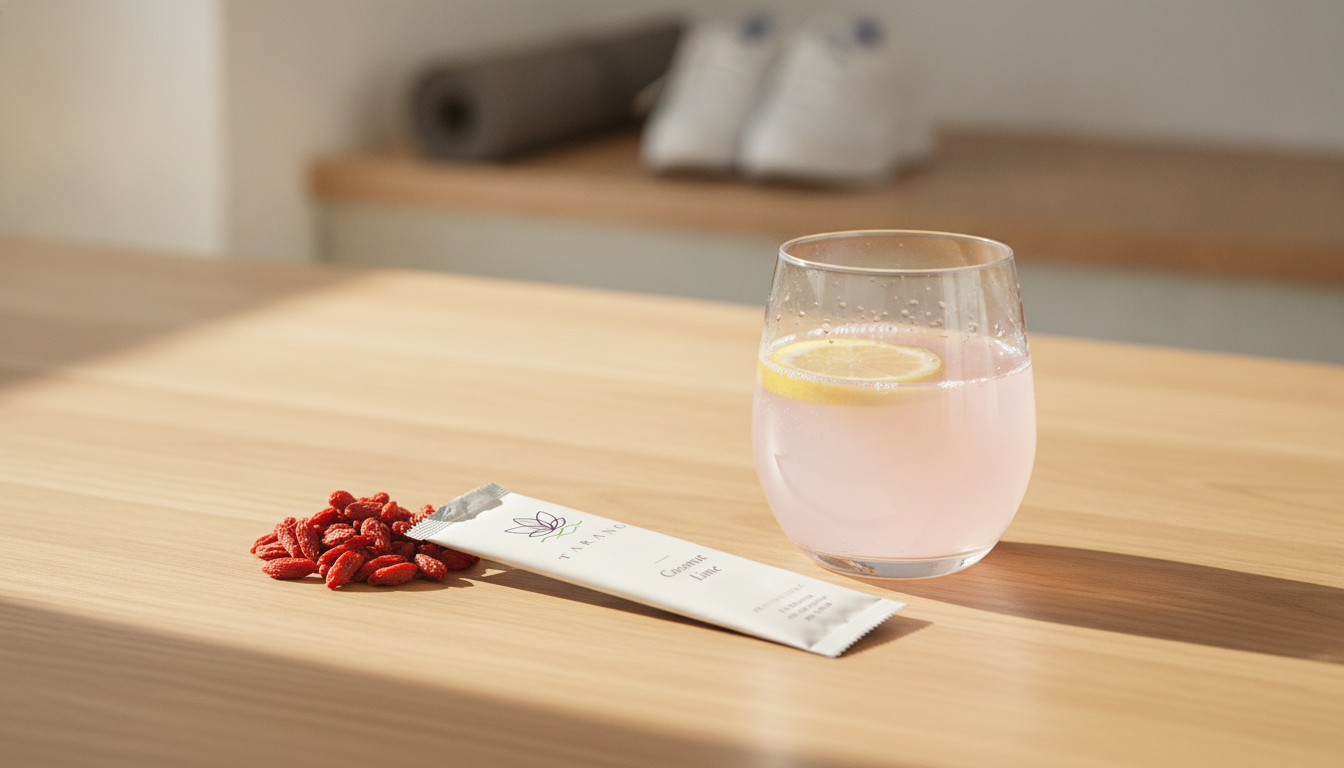
Tarang includes six botanicals drawn from Ayurvedic and Traditional Chinese Medicine traditions. In the Ayurvedic category: shatavari, amla, and ginger. From TCM tradition: schisandra, goji, and ophiopogon. These are named by their tradition, not by any disease claim. They are part of the formula because the brand wanted a stick that felt like more than just sodium and creatine in plain water.
Ginger, for example, is one most studio regulars already know from teas and tonics. Amla is a high-vitamin-C botanical that pairs naturally with the added vitamin C in the formula. Schisandra has a long history in TCM practice. None of these are added as medical treatments. They are here because they belong in a formula designed for people who think carefully about what goes into their practice.
The L-theanine (200 mg per stick) is worth noting for heated-class practitioners specifically. Theanine is an amino acid found in green tea and is commonly paired with focus and calm alertness. For a practice environment where mental steadiness matters as much as physical output, that is a thoughtful addition without the caffeine spike.
Vitamins C, D3, and B12 round out the formula. These are not afterthoughts. Vitamin C supports collagen and connective tissue, which matters when your practice involves a lot of hip openers and deep stretches. D3 and B12 are two vitamins that active people, especially women who train indoors regularly, often fall short on.
Building the One-Stick Habit Around Your Schedule
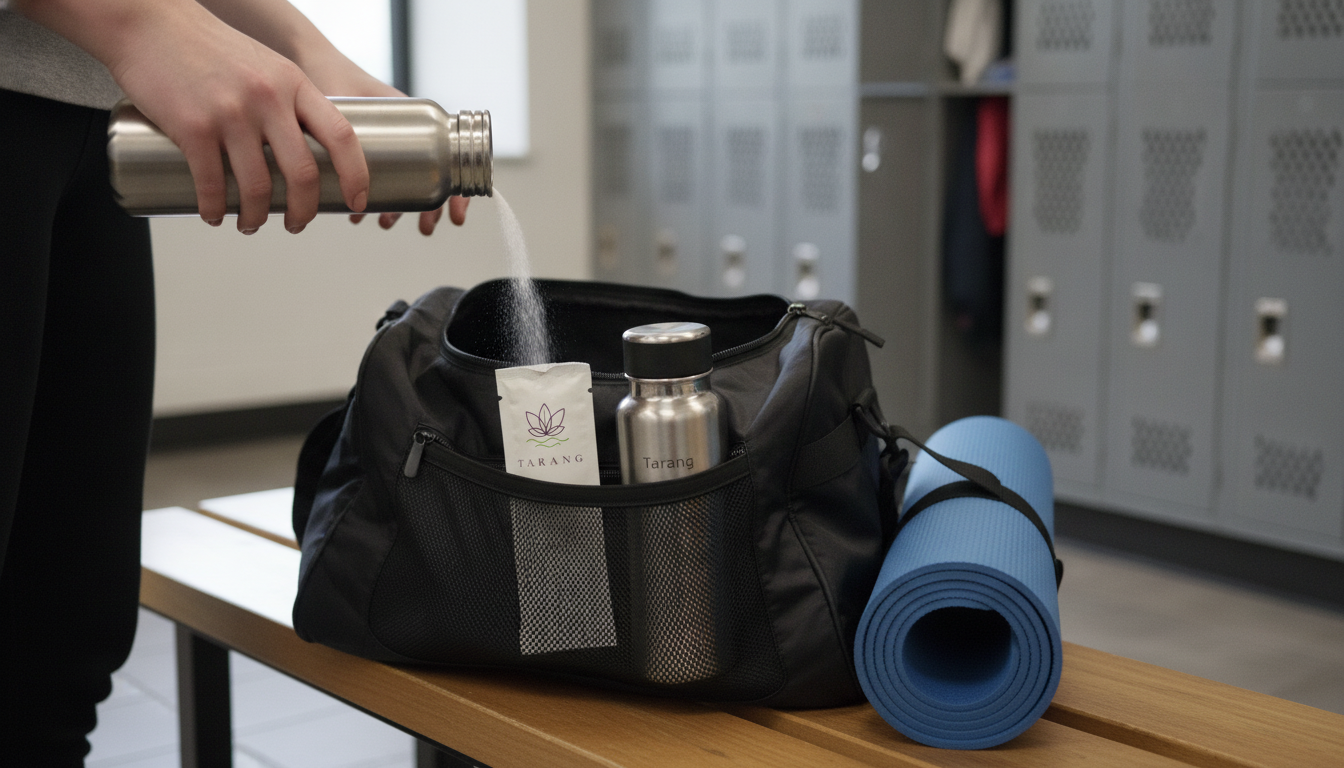
The most common mistake with creatine is treating it like a pre-workout that only matters on training days. Creatine works by building up in your muscle tissue over time. A daily stick, even on the days you are just stretching at home or going for a slow walk, keeps those stores topped off.
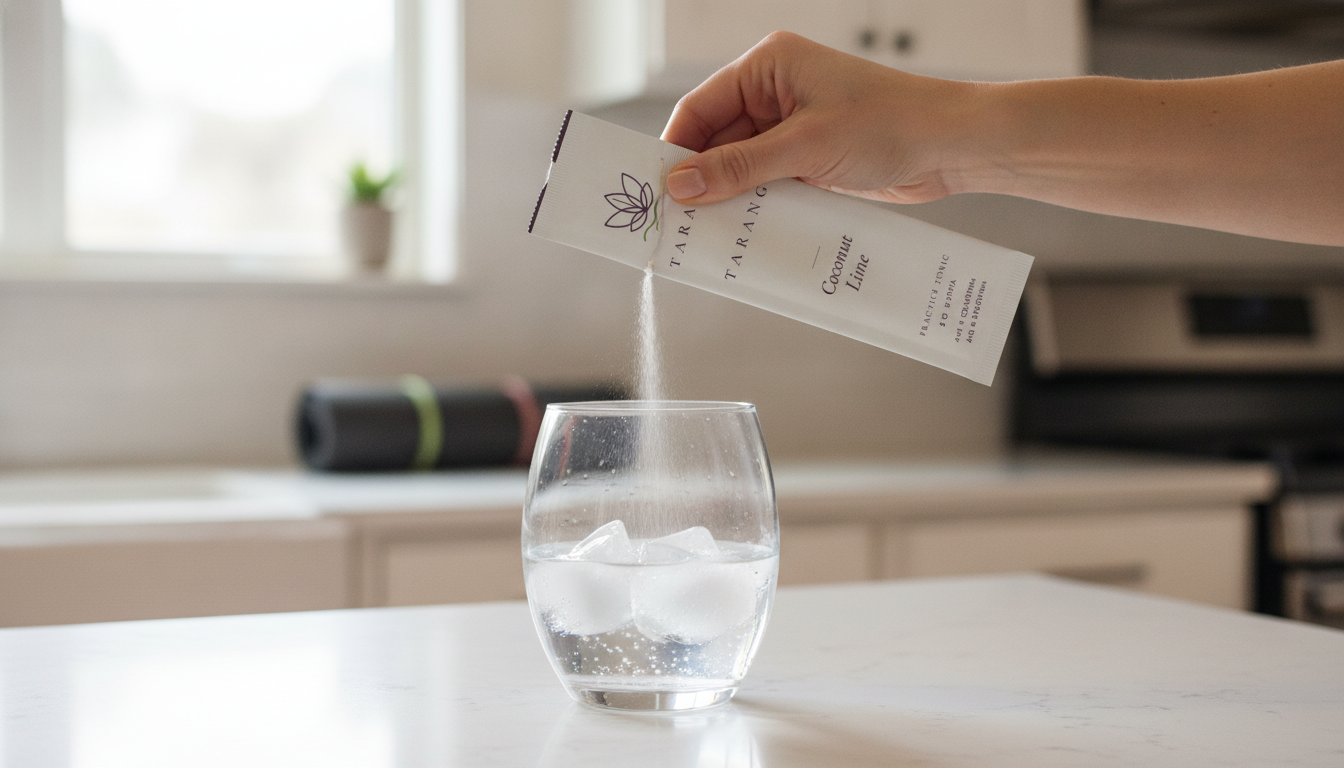
For heated class days, the timing that works best for most people is mixing one stick into 12-16 oz of water about 20-30 minutes before class. This gives the sodium and electrolytes a head start before the sweat starts. You do not need to do math. You do not need a second product for creatine. One stick covers both.
For rest days, drink the stick the same way you normally would, just at whatever time of day you usually train. The consistency is the habit. The habit is what makes the creatine accumulate.
If you want to try a few flavors before committing to a monthly box, the Tarang Discovery 14 gives you 14 sticks in a mix of available flavors, shipped once, no subscription required. It is a practical way to find out which flavor you actually want to rip open every morning before class.
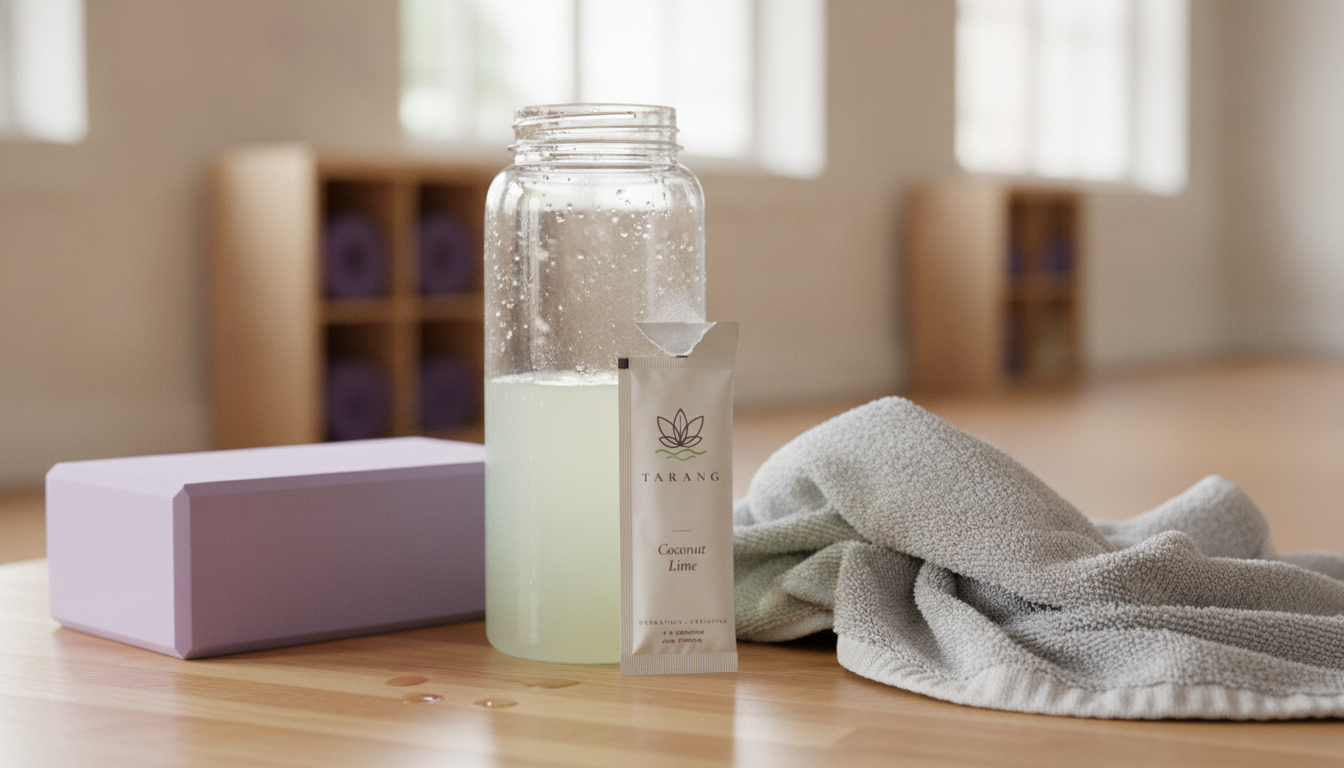
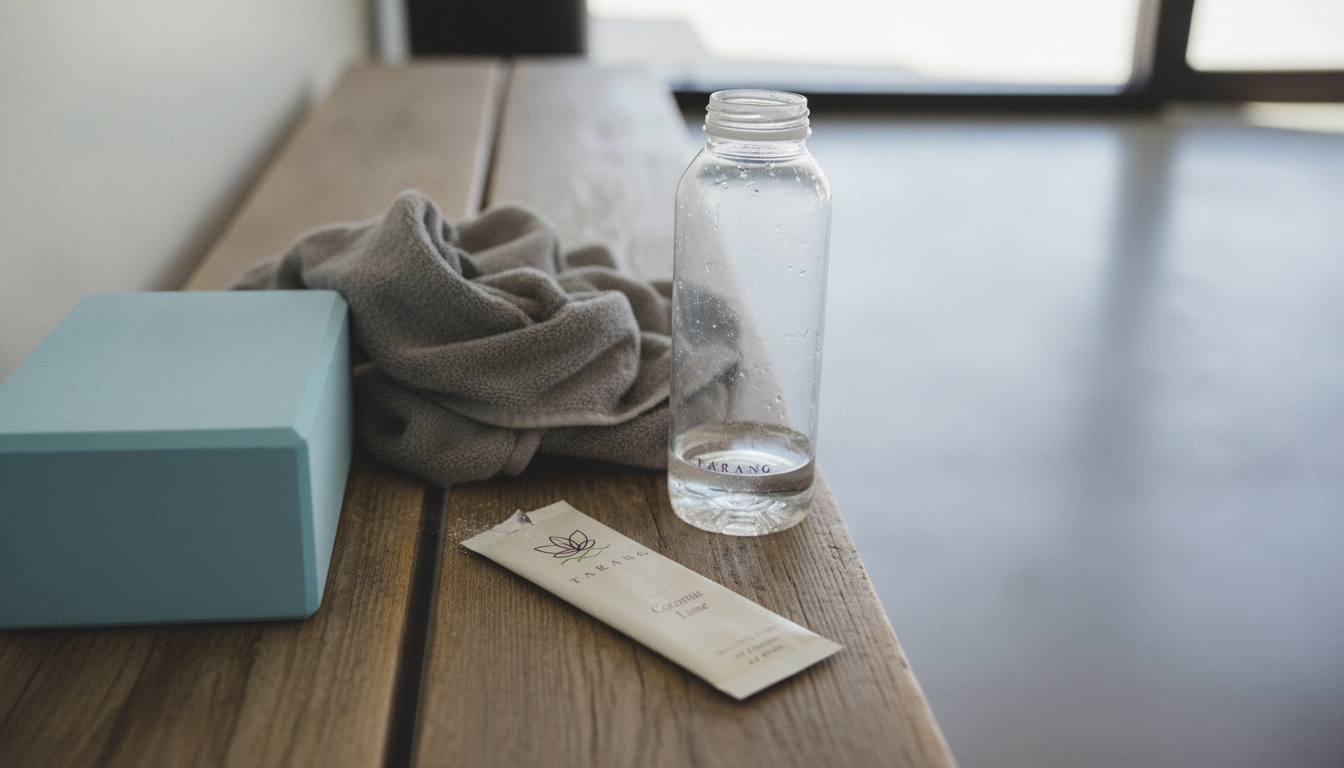
For a hint of the tropics, Tarang Coconut Lime mixes well with cold water and pairs naturally with a heated room. The Hibiscus Berry flavor drinks bright and light, which is useful when heat has already taken the edge off your appetite for anything heavy.
The ratio of electrolytes to creatine in Tarang is not accidental. It is designed for exactly the kind of training where both things matter at once. One stick, one habit, one less thing to figure out before you unroll your mat.
Questions
- Does being dehydrated affect how creatine works?
- Research suggests that creatine is taken up by muscle cells alongside water and sodium. If you are already dehydrated going into a class, your cells may be less primed to absorb and use creatine efficiently. That is one reason pairing creatine with a proper electrolyte dose matters, especially before a heated session. This is not a medical claim; consult a qualified professional for personal health guidance.
- How much sodium do you actually lose in a heated yoga or pilates class?
- Sweat sodium varies from person to person, but research consistently shows heated-room exercise drives higher losses than air-conditioned workouts. A range of 500-1000 mg of sodium per hour of sweaty exercise is commonly cited in sports nutrition literature. Tarang provides 400 mg of sodium per stick alongside potassium, magnesium, and calcium to cover the main electrolytes lost in sweat.
- Should I take creatine before or after a heated class?
- Timing matters less than daily consistency for creatine. Most people find it easiest to mix one stick into water and sip it in the 20-30 minutes before class. This also gives the electrolytes time to start doing their job before you start sweating. If you prefer post-class, that works too, as long as you take it every day including rest days.
- Can I take two Tarang sticks on heavy training days?
- Tarang is formulated for one stick per day. If you have a particularly long or intense session, focus on extra plain water alongside your one stick rather than doubling up. For specific supplementation questions, check with a healthcare professional.
- Why does Tarang use allulose and monk fruit instead of stevia?
- Stevia can leave a bitter or metallic aftertaste that many people find distracting, especially in a low-sweetness formula. Allulose behaves like sugar in water, giving a cleaner, rounder sweetness. Monk fruit adds gentle lift without the aftertaste. The result is a stick that tastes lightly sweet and does not fight with the flavor of your water or your post-class palate.
This guide is general information, not medical advice. If you are pregnant, nursing, taking medication or managing a condition, talk to a healthcare professional before changing how you hydrate or supplement.