
The case for creatine outside the weight room
Creatine has a branding problem. For decades it has lived in the supplement aisle next to pre-workout tubs and mass-gainer jugs, which makes it easy to assume it is only for people who bench press three times a week. That assumption is worth revisiting.
Creatine monohydrate is one of the most researched sports supplements in existence. The way it works is simple: your muscles store a compound called phosphocreatine, and your body uses that stored energy to power short, intense efforts, whether that is a heavy squat, the last push of a HIIT sprint, or holding a deep warrior pose when your legs are already shaking in a 95-degree room. Topping off those stores daily supports the kind of effort that heated-class athletes, pilates practitioners, and runners put out session after session.
Research also points toward recovery and muscle preservation benefits, which matter for anyone training consistently, not just people chasing a one-rep max. For adults, especially women, who train four to six days a week across different formats, creatine is increasingly being discussed as a foundational supplement rather than a niche one. This is general information, not medical advice. Talk to your doctor before starting any supplement routine.
What electrolytes actually do in a 95-degree room

Before getting to the combination, it helps to understand why electrolytes deserve as much attention as creatine in a heated practice.
When you sweat, you lose sodium first, then potassium, magnesium, and calcium in smaller amounts. Plain water replaces fluid volume but not the minerals your muscles and nerves need to fire correctly. In a hot yoga class, a vigorous pilates session, or a summer long run, that gap between water and electrolytes is where cramps, early fatigue, and that flat feeling at the end of class tend to come from.
The sodium number matters here. A stick with 400 mg of sodium is meaningfully different from a low-sodium option designed for casual sipping. Serious sweat means serious salt replacement. Potassium, magnesium, and calcium round out the picture, supporting muscle contraction and fluid balance throughout the session, not just before it starts.
Pairing creatine and electrolytes in one step

The practical challenge with running two separate supplement habits is consistency. A creatine powder in one container and an electrolyte packet in another means two things to remember, two products to finish, and two opportunities to skip one of them on a busy morning.
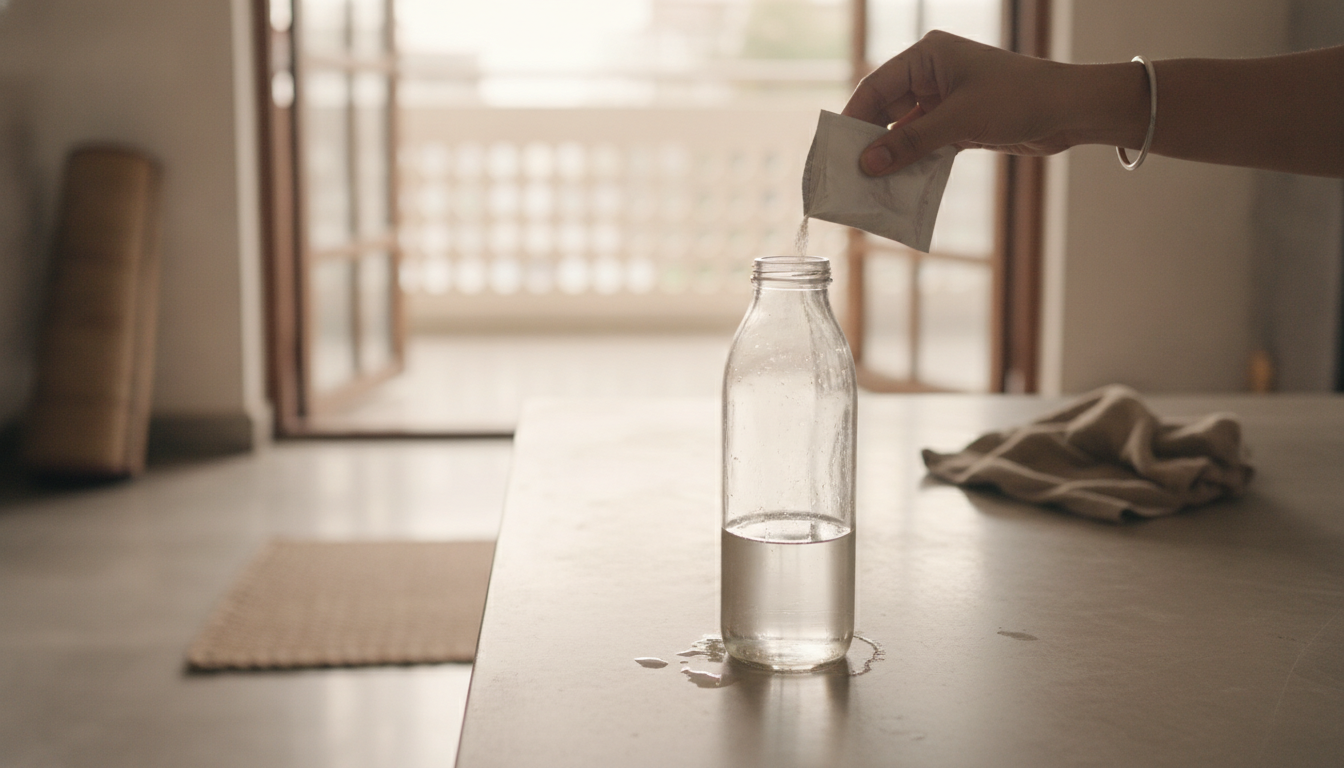
That is the reason Tarang was built the way it was. Each stick delivers 5 g of micronized creatine monohydrate alongside a full electrolyte blend (sodium, potassium, magnesium, calcium, and coconut water powder), six botanicals drawn from Ayurvedic and TCM traditions (shatavari, amla, ginger, schisandra, goji, and ophiopogon), L-theanine at 200 mg, and vitamins C, D3, and B12. One stick in 12 to 16 oz of water covers both habits.
The formula skips stevia entirely, using allulose and monk fruit instead, because a lot of athletes find stevia leaves a bitter finish that makes it harder to drink the volume they actually need. There is no added sugar, no caffeine, and no artificial sweeteners.
If you want to try a range of flavors before committing, the Tarang Discovery 14 gives you 14 mixed-flavor sticks in one order for $45. Launch flavors include Hibiscus Berry and Yuzu Lemon, with Coconut Lime rounding out the current lineup.
Making a daily creatine habit actually stick

The research on creatine is consistent on one point: daily use matters more than when you take it. Muscle creatine stores build over time, which means the benefit is cumulative. Missing days slows that accumulation.
The easiest way to make it daily is to attach it to something you already do before every training session. Here is what a simple routine looks like for heated-class athletes.
Thirty minutes before class: Mix one stick into 14-16 oz of cool water and drink it on your way to the studio. This covers both creatine and pre-class hydration.
During class: Plain water is fine. The electrolytes from your stick are already in your system.
On rest days: Mix a stick into water in the morning, same as a training day. Creatine does not need class to go with it.
If you train across multiple formats, say a Monday strength session, Wednesday hot yoga, and a Saturday long run, the routine stays identical. One stick, every day, same time. That predictability is what makes it a habit rather than something you remember only when you are already tired.
A note on what to expect
Creatine is not a stimulant. You will not feel it the way you feel caffeine. Most people notice the difference in sustained output over several weeks, particularly in the later rounds of a circuit, the last five minutes of a heated flow, or the final miles of a long run. It is a slow build, which is why the daily habit is the whole game.
If you are pregnant, nursing, or managing a health condition, check with your doctor before starting creatine or any new supplement. This article is for general informational purposes and is not medical advice.
The bottom line
Creatine is not just for the weight room, and electrolytes are not just for endurance athletes. Both belong in a serious practice routine, and combining them in one daily stick is the most consistent way to make sure neither habit gets skipped. If you have been curious about creatine but put it off because it felt like something for a different kind of athlete, this is a good place to start.
Questions
- Is creatine safe to take on days I do hot yoga instead of lifting?
- Most exercise scientists recommend taking creatine every day, including rest and low-intensity days, to keep muscle stores topped off. Hot yoga counts as a training day, so your regular stick still makes sense. As with any supplement, talk to your doctor if you have questions about your specific situation. This is not medical advice.
- Will creatine make me retain water and feel puffy during class?
- Creatine does draw water into muscle cells, which is part of how it works. Most people do not notice visible puffiness, especially at a 5 g daily dose without a loading phase. Staying well hydrated, including with electrolytes before and during a heated class, helps everything move smoothly.
- Can I mix Tarang with hot water or does it need to be cold?
- Tarang dissolves well in both cold and room-temperature water. Many people mix it in a shaker with 12-16 oz of water and drink it before class. Hot liquid is not ideal because it can affect some botanical compounds, but cool or room-temp works great.
- Do I need to cycle off creatine, or can I use it year-round?
- Cycling is not required for creatine monohydrate based on current research. Many athletes take it consistently throughout the year. That said, supplement decisions are personal, and checking in with a healthcare provider is always a good idea. This is not medical advice.
- What makes Tarang different from just buying a plain creatine powder and a separate electrolyte packet?
- Tarang combines 5 g of micronized creatine monohydrate with a full electrolyte profile (sodium, potassium, magnesium, calcium, and coconut water powder) plus botanicals and L-theanine in one stick. That means one step instead of two products, and it is sweetened with allulose and monk fruit, no stevia, no artificial sweeteners, and no added sugar.
This guide is general information, not medical advice. If you are pregnant, nursing, taking medication or managing a condition, talk to a healthcare professional before changing how you hydrate or supplement.