Why Botanicals Made It Into a Hydration Stick at All
When most people pick up an electrolyte stick, they read the sodium number and move on. The botanical layer in Tarang is easy to scroll past, which is a shame, because it is one of the more deliberate choices in the formula.
Tarang was built for people who train hard in hot rooms, on the reformer, in the weight room, and on long runs. The electrolyte and creatine core handles the obvious work: sodium replaces what sweat takes, creatine supports muscle output over time. But the six botanicals in the blend do something different. They come from two long-running herbal traditions, Ayurveda and Traditional Chinese Medicine, and each one was chosen to fill a specific supporting role without duplicating what the electrolytes and creatine already do.
This article walks through all six, one at a time, plainly. No medical claims. Just context for what you are actually drinking.
These statements have not been evaluated by the Food and Drug Administration. Tarang is not intended to diagnose, treat, cure, or prevent any disease. Consult your healthcare provider before starting any supplement, especially if you have a health condition or take medications.
The Ayurvedic Three: Shatavari, Amla, and Ginger
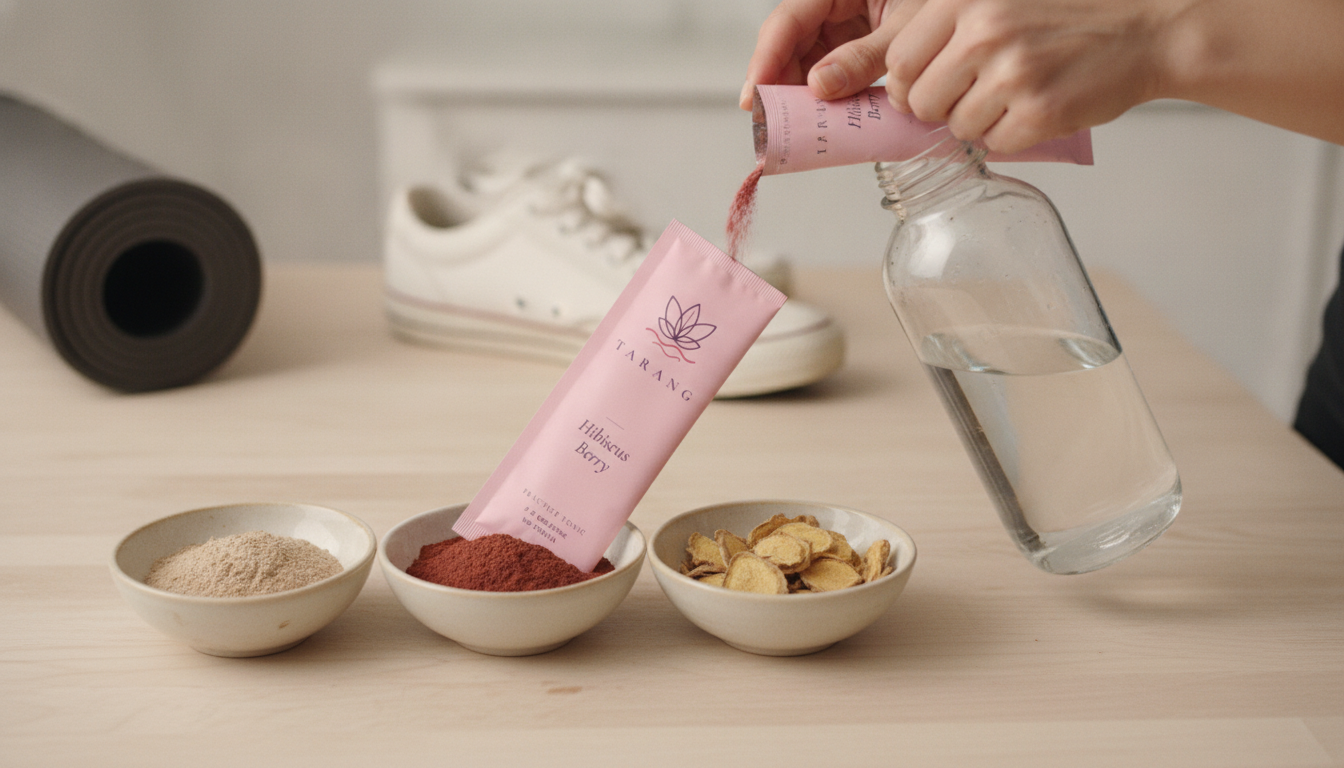
Shatavari
Shatavari (Asparagus racemosus) is one of the most widely used herbs in Ayurvedic practice. In classical texts it is described as a rasayana, a category of herbs associated with nourishment and resilience. It has a long history of use for supporting recovery and general wellbeing, particularly in active women. Tarang includes it as part of the botanical foundation, not as a single-herb solution for anything.
Amla
Amla, also called Indian gooseberry (Phyllanthus emblica), is one of the most concentrated natural sources of vitamin C. Tarang already includes vitamin C in the formula, and amla contributes to that total from a whole-food source. In Ayurvedic practice amla is considered cooling and is often used to support digestion and immunity. For a stick you are drinking around training, both of those contexts make sense.
Ginger
Ginger (Zingiber officinale) is probably the most familiar herb in the blend. It has been used in cooking and herbal medicine across dozens of cultures for thousands of years. In the context of a workout drink, its main practical role is digestive comfort. Training on a stomach that is not cooperating is miserable. Ginger is a low-drama addition that pulls its weight without requiring much explanation.
The TCM Three: Schisandra, Goji, and Ophiopogon
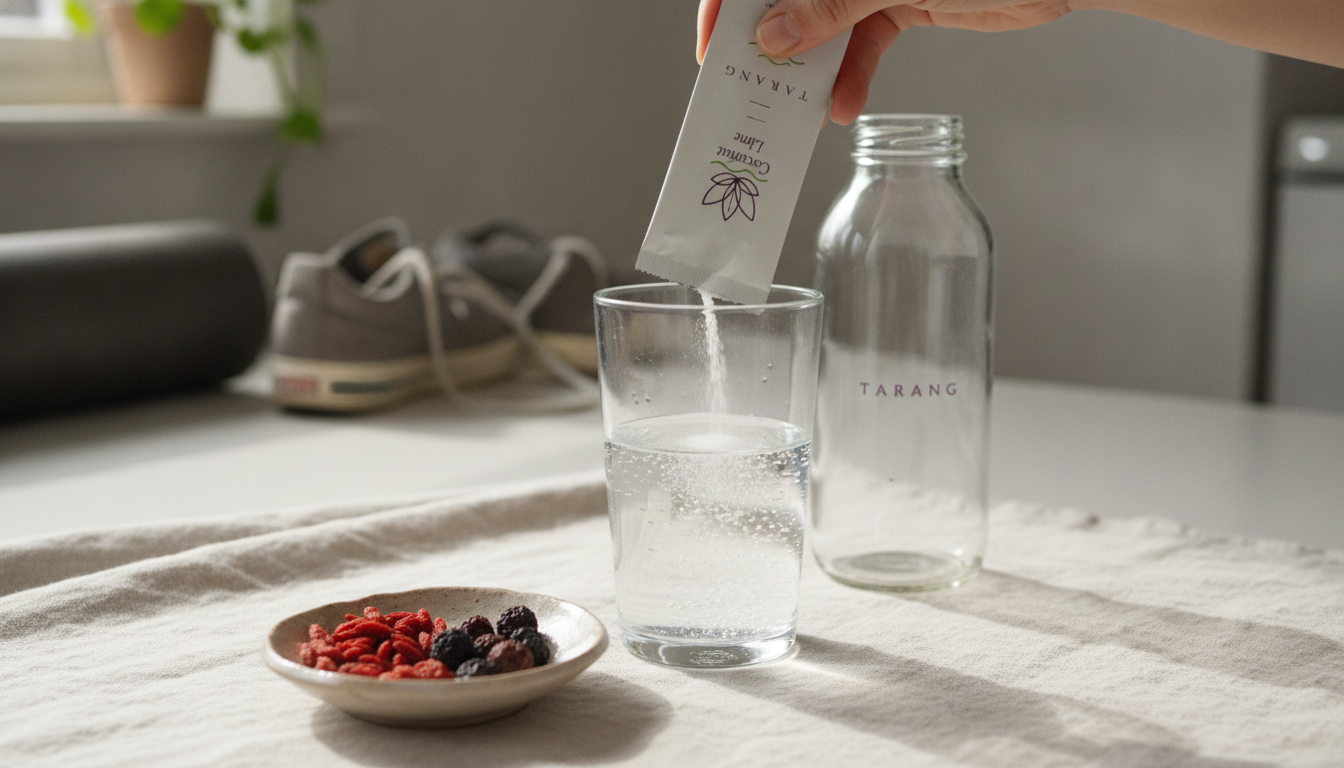
Schisandra
Schisandra (Schisandra chinensis) is a berry used extensively in Traditional Chinese Medicine. It is sometimes called the five-flavor berry because it registers sweet, sour, salty, bitter, and pungent all at once. In TCM, schisandra is classified as an adaptogen-adjacent herb associated with supporting mental clarity and physical stamina under stress. For someone heading into a 60-minute heated flow or a heavy lifting session, that context is relevant. Tarang is not making performance claims about schisandra specifically, but it earned its spot in the formula.
Goji
Goji berries (Lycium barbarum) have been in TCM formulas for centuries and are now common enough in Western health food culture that most people have seen them in trail mix. They are a source of antioxidants and polysaccharides. In TCM, goji is associated with supporting the eyes, liver, and kidney systems, and with general vitality. Inside a hydration stick, they add to the antioxidant layer alongside amla and vitamin C.
Ophiopogon
Ophiopogon (Ophiopogon japonicus), also called mai dong in TCM, is the least-known herb in the blend but one of the most purposeful. It is a root used in Chinese medicine to support hydration at a tissue level, specifically to address what TCM calls yin deficiency, a state associated with dryness and depletion. For a drink designed to hydrate people who sweat hard in hot rooms, ophiopogon is a considered choice. It is quiet in the formula but fits the brief exactly.
How the Botanicals Fit Into Your One-Stick-a-Day Routine

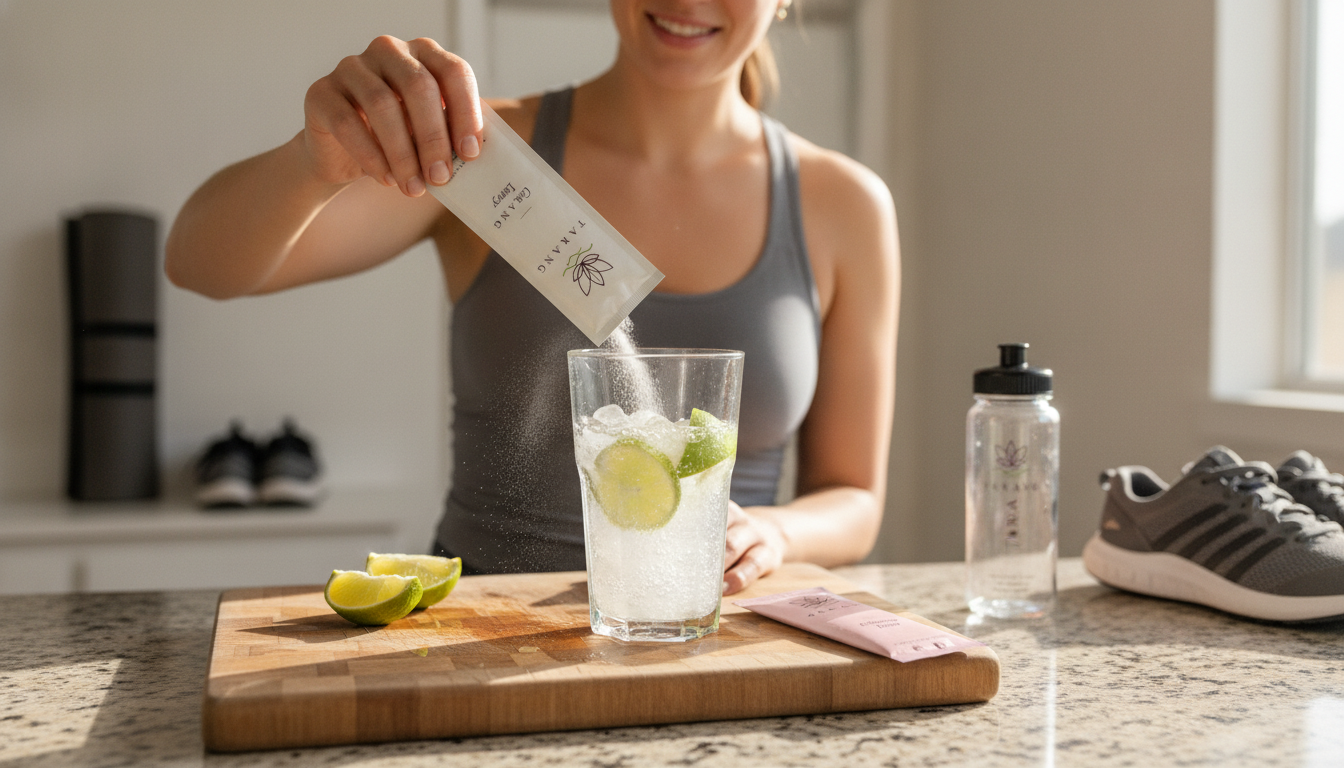
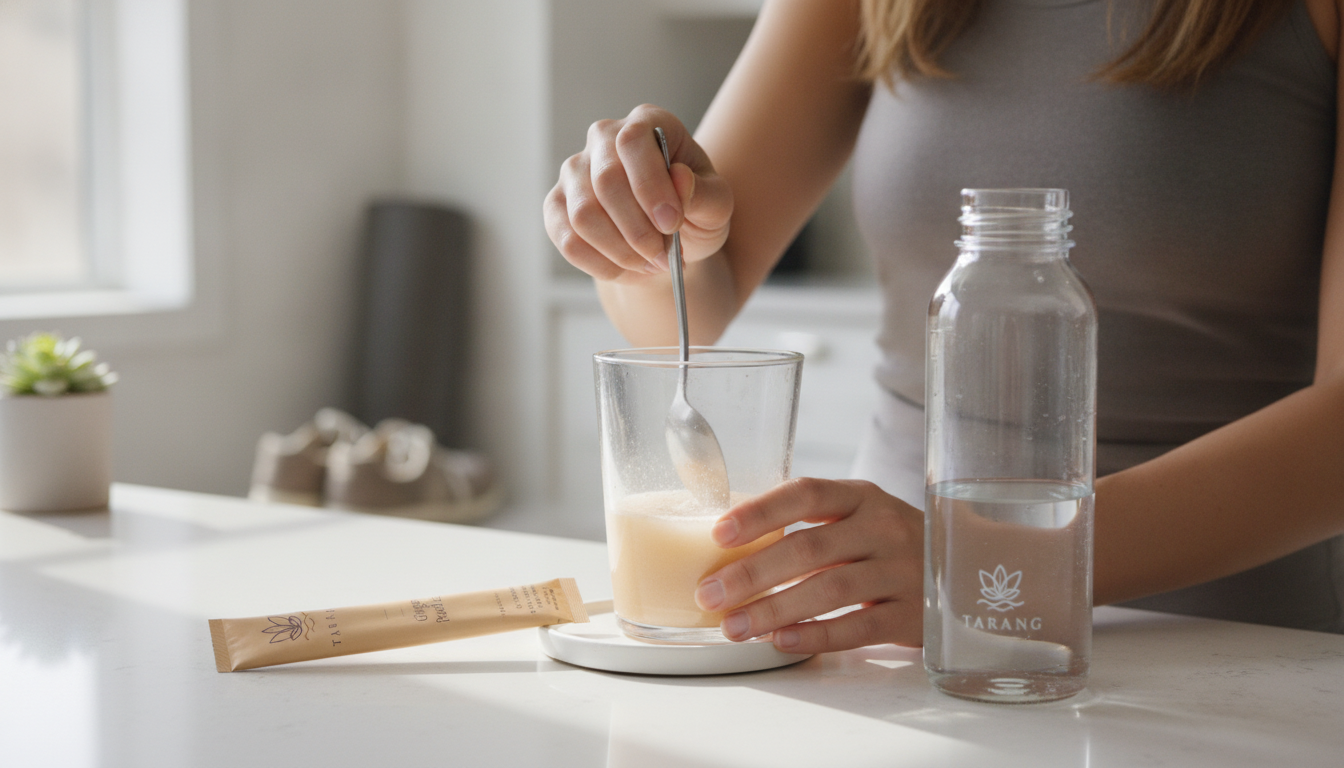
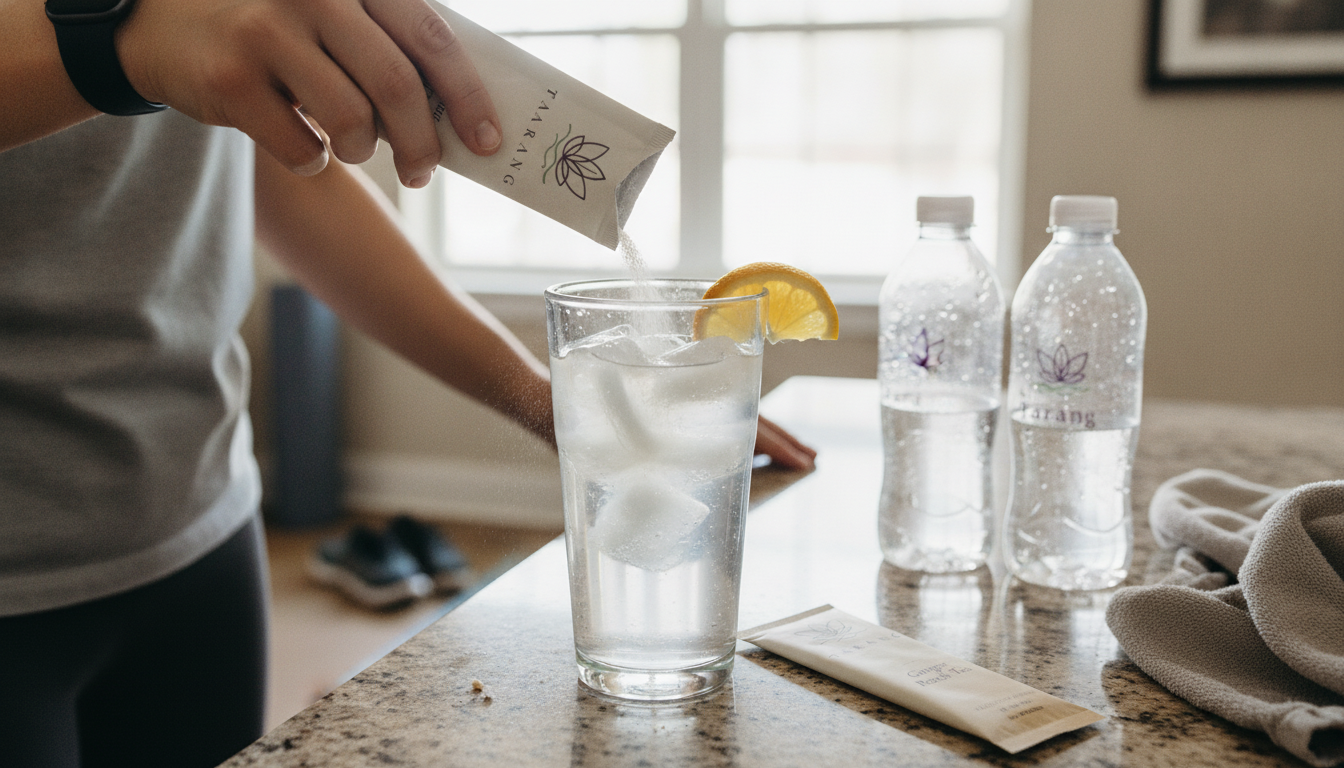
None of the botanicals change how you use Tarang. One stick per day, mixed into 16 to 20 ounces of water, is the routine. The botanicals dissolve alongside the electrolytes, creatine, L-theanine, and vitamins in the same mix.
If you train daily, the consistency of a single stick on both practice days and rest days is what lets the creatine accumulate and the botanical layer stay topped up. Skipping rest days means gaps in both.
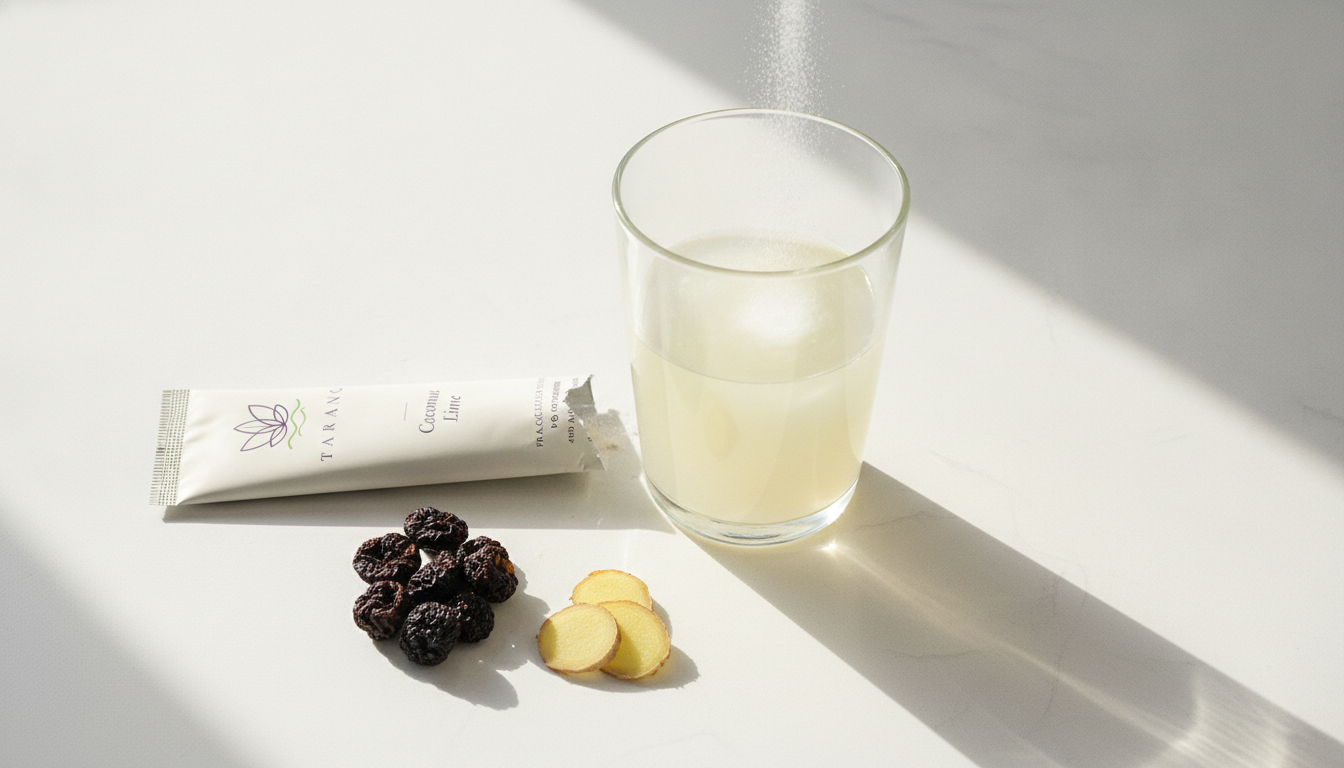
All three launch flavors carry the full botanical blend. Yuzu Lemon is bright and citrus-forward. Hibiscus Berry is tart and floral. Coconut Lime is smooth and tropical. If you want to try all three before choosing a subscription flavor, the Discovery Box ships 14 mixed sticks for $45 and is a good first order.
The subscription Monthly Box is 30 sticks at $75 with free US shipping, and you can skip, pause, or swap flavors online without calling anyone. If you already know your flavor, that is the most straightforward way to keep the routine going without thinking about it.
The Short Version
Six botanicals, two traditions, one coherent formula. Shatavari and amla from Ayurveda bring a nourishing, vitamin-rich foundation. Ginger keeps digestion easy. Schisandra from TCM adds a stress-support layer. Goji contributes antioxidants. Ophiopogon supports hydration from the inside out.
None of them are magic. None of them are filler. They are in there because the people who built Tarang thought carefully about what a training drink for active adults should actually contain, and then put those things in.
Adults 18+ only. Do not use if pregnant or nursing. This content is not medical advice. These statements have not been evaluated by the FDA.
Questions
- Are the botanicals in Tarang clinically proven to improve athletic performance?
- These statements have not been evaluated by the FDA. The botanicals in Tarang are traditional herbs included to complement the electrolyte and creatine formula. They are not intended to diagnose, treat, cure, or prevent any disease. If you have a health condition or take medications, check with your healthcare provider before use.
- Why does Tarang use both Ayurvedic and TCM botanicals in one stick?
- Ayurveda and Traditional Chinese Medicine have long catalogued herbs that support hydration, digestion, and stress response. Tarang drew from both traditions to build a balanced botanical layer that sits alongside the electrolyte and creatine core without overlapping or conflicting.
- Does the botanical blend change anything about how I mix or time the stick?
- No. One stick per day, mixed into 16-20 oz of water, is the same routine regardless of which launch flavor you pick. The botanicals dissolve with the electrolytes and creatine in the same mix.
- Is Tarang safe if I am pregnant or nursing?
- No. Tarang is intended for adults 18 and older. Do not use if you are pregnant or nursing. Consult your healthcare provider with any questions about supplements during pregnancy or lactation.
- Which Tarang flavor should I start with if I want to try the botanical formula?
- All three launch flavors contain the same botanical blend. Yuzu Lemon is bright and citrusy, Hibiscus Berry is tart and floral, and Coconut Lime is smooth and tropical. Try the Discovery Box to taste all three before committing to a monthly subscription.
This guide is general information, not medical advice. If you are pregnant, nursing, taking medication or managing a condition, talk to a healthcare professional before changing how you hydrate or supplement.